"The real voyage of discovery consists not in seeking new landscapes, but in having new eyes."
Alchemist
The Mature Alchemist puts mastery to work. As the Magician's Warrior, he brings spirit into matter—fire meeting earth. He is the Magician who does.
His competence creates rather than controls. His skills serve the work of change. He is expert and eternal student, master craftsman and humble learner.
If we can imagine it, it can be done. The Alchemist masters technology, change, and the animation of matter. He turns what he imagines into something you can hold. He is engineer, developer, systems thinker. He loves building, creating, making something from nothing. The world is his workshop. He tries things nobody has tried yet.
Declarations
- I don't know everything, but I can figure it out.
- I master transformation.
- I love building & making from nothing.
- I compare to my past self & improve.
- I succeed, fail & always learn.
- I maintain curiosity with mastery.
- I use my skills to create & transform.
- I remain teachable while becoming expert.
Balance: Mastery & Curiosity
The Alchemist balances Mastery and Curiosity. Mastery is deep competence earned through sustained practice. Curiosity approaches each situation fresh, staying open despite expertise.
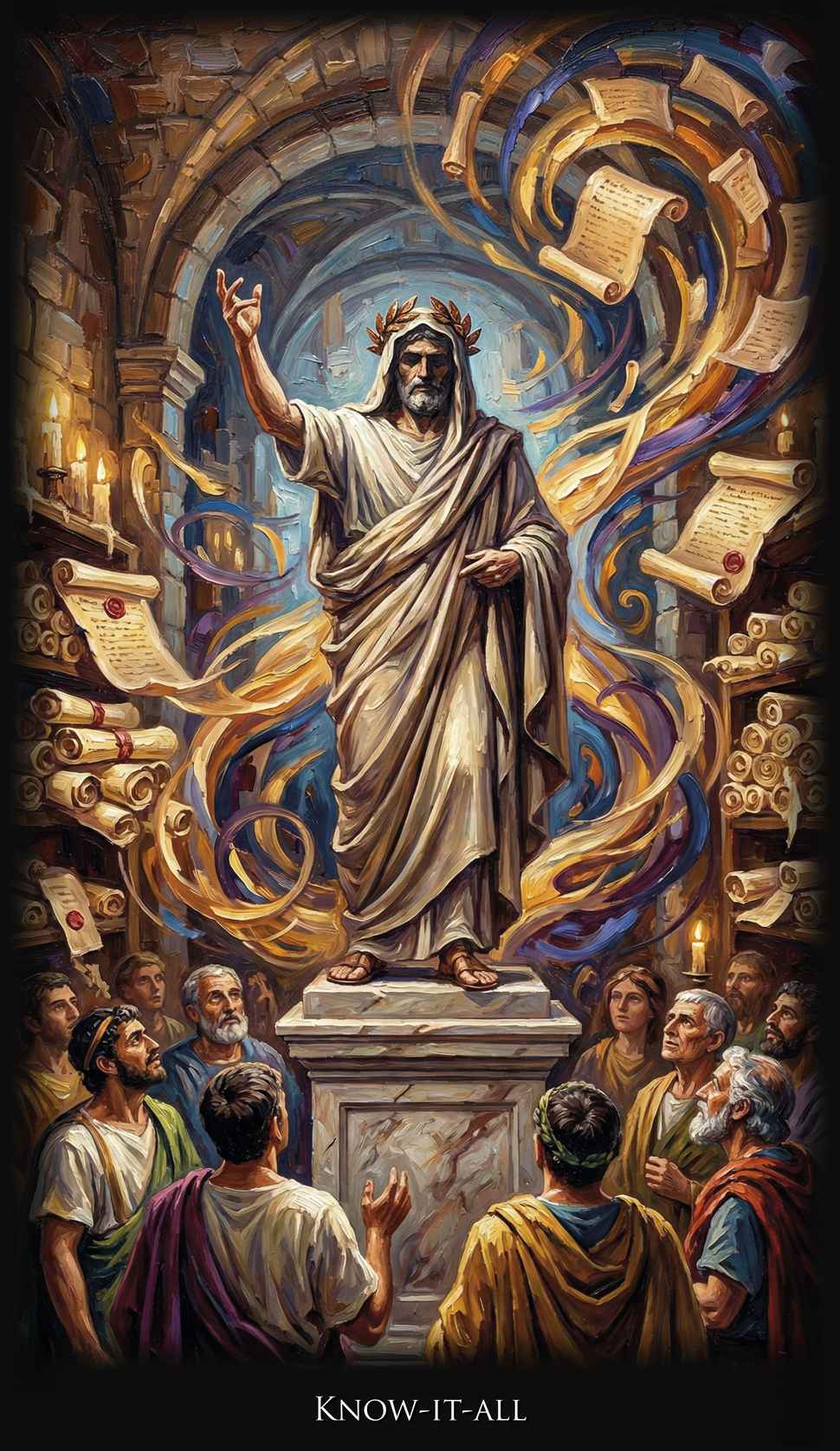
Mastery without curiosity becomes arrogance. The Know-it-all (active shadow) closes to new learning. He dominates rather than creates. He stopped learning because he thinks he already knows.
Curiosity without mastery becomes dilettantism. The Consumer (passive shadow) consumes endless tutorials but never builds competence. He always prepares to create but never creates.
The Alchemist holds both. He masters skills and stays curious. The Know-it-all must rediscover curiosity. The Consumer must commit to practice and creation.
The Alchemist's Understanding
Making Real: The Alchemist bridges imagination and reality. Ideas mean nothing until they take form. He builds and makes. He turns vision into something we can touch.
Transformation as Law: Everything changes. The Alchemist works with this law rather than against it. He understands the stages—breakdown, purification, recombination—and trusts them.
The Work Works on Us: Every creation transforms the creator. The Alchemist knows he is the primary material. Mastering a skill reshapes the one who masters.
Skill as Freedom: Mastery liberates. The more competent he becomes, the more possibilities open. Limitation comes from lack of skill, not imagination.
Process over Outcome: The work itself is the reward. He creates because he must. Making is its own satisfaction.
The Alchemist's Laboratory
Every Alchemist needs a laboratory—a sacred space where transformation happens.
Workshop, studio, garage, kitchen, desk. The form matters less than the function: a place set apart for the work. Here ordinary rules suspend. Experiments happen. Failure is expected. The mess of creation is welcomed.
The laboratory is where he meets his materials. Wood, code, words, metal, ideas—he knows them intimately. He knows their properties, resistances, possibilities. Mastery begins with respect for the material.
His tools become extensions of his hands. He maintains them, knows their quirks, feels when something is off. Craftsman and tool are partners.
Time moves differently here. Hours disappear. He enters flow states where self dissolves into work. This is the Warrior's focus applied to creation: complete presence, total engagement.
The laboratory is also a temple. Here he practices devotion to craft. Here he makes offerings of attention and effort. Here transformation becomes possible.
The Alchemist's Crucible
Every transformation requires a crucible—a container that holds heat and pressure long enough for change to occur.
The Alchemist learns to apply heat. Not too much, not too little. Too much destroys the material. Too little and nothing changes. He develops feel for the right intensity—when to push harder, when to back off.
He learns to hold time. Transformation cannot be rushed. Some processes take hours. Some take years. The Alchemist resists the urge to open the crucible too soon, to check if it's working, to force outcomes. He waits.
He balances control with mystery. He controls what he can: quality of materials, temperature, timing. But he cannot control the transformation itself. Something happens in the crucible that he doesn't fully understand. He sets conditions. Change happens on its own.
This is the Warrior's discipline meeting the Magician's wonder. He brings rigor to the process and humility to the outcome. He does his part and trusts the rest.
The messy middle is where transformation happens. He doesn't panic when his project looks like chaos. He knows this stage. Experience taught him to trust the process.
The Alchemist's Relationship with Failure
Failed experiments are data to him, not defeats. Each attempt that doesn't work crosses something off the list and nudges him closer to what will.
Failure still stings. But he learns what it has to teach. The path to mastery runs through countless failures. He made peace with that. Without failure, progress is just talk.
His growth mindset means he compares himself only to his past self. He's not competing with others. He's on his own journey.
The Alchemist's Joy
He finds real joy in the act of making. Taking raw materials and turning them into something that didn't exist before.
This joy sustains him through difficult parts: repetitive practice, frustrating plateaus, projects that fail. He creates because he must. The work calls him forward.
Living as the Alchemist
He approaches life as a laboratory. What satisfies him isn't applause but getting something to work. He solves problems. He turns what he sees in his head into something others can use.
As the Magician's Warrior, he represents spirit in action.