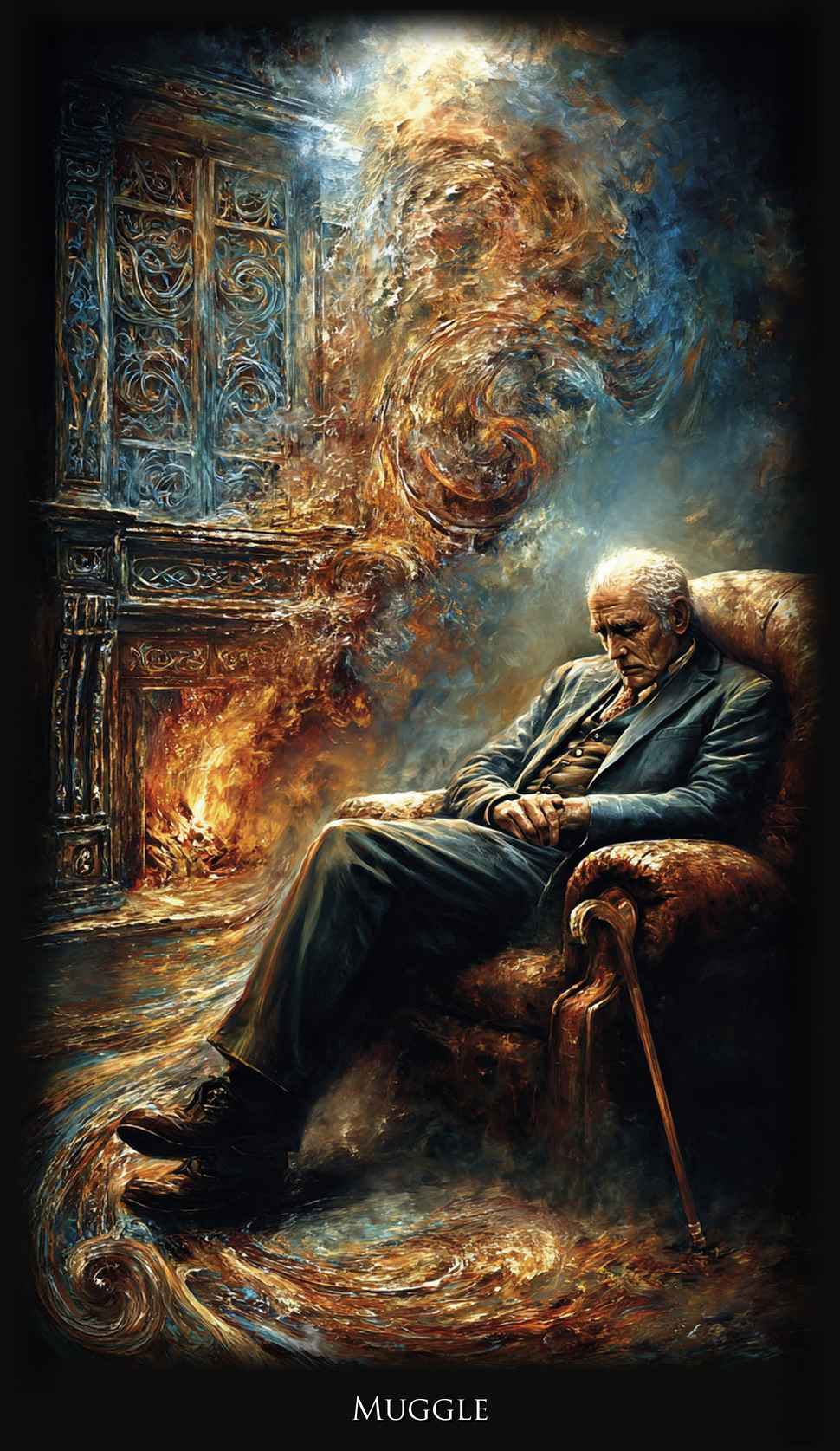
"In youth we learn; in age we understand."
Elder
The Elder is a blessing to his people. He holds memory and story, perspective, pattern recognition, care, knowledge and wisdom.
The Elder is the King who has lived long enough to see the same mistakes twice and the same truths proven out over decades. His vision reaches back through generations and forward into ones he won't live to see. He knows where people fit in a story bigger than any one of them. What he says and does keeps the old roots alive. He builds things that will still be standing when he is gone.
Gone is the Elder's might and prowess, worldly ambition or desire for power. His value has deepened. He is a treasure to those around him. He carries no urgency and finds home in the timeless, while offering guidance to his realm here and now.
He befriends death while embracing the last of his life. He does not try to live forever or stay young. He does not grip power. He is too wise for that. He is peaceful, funny, and poignant.
He is sought after for his counsel and his company. He is generous with his wisdom, admired for his journey, adored by his family.
The Mature Elder owns himself completely and puts that ownership to work for the long haul. His authority grew from years of honoring the people who taught him, even as he learned to stand on his own.
His sovereignty includes responsibility to lineage. He protects the legacy of elders and passes it on. He inspires and blesses his people. He balances order and chaos with the wisdom of experience. He knows when to hold steady and when to adapt. He receives and transmits wisdom. He holds what life taught him and hands it down to whoever is ready to hear it.
Declarations
- I inspire and bless my people and my realm.
- I balance order & chaos in my realm.
- I protect my elders' legacy and pass it on.
- I create routines & order time long-term.
- I delay gratification for lasting value.
- I honor the elders who taught me.
- I get counsel from those with wisdom.
- I maintain hierarchies of competency.
Balance: Sovereignty & Responsibility
The Elder balances Sovereignty and Responsibility. Sovereignty is his authority: the right to rule his life and influence his realm. Responsibility is his understanding that this power must serve something greater than himself.
Sovereignty without responsibility becomes arrogance. The Rebel (active shadow) rejects authority and tradition. He refuses to learn from elders. He uses power for self alone.
Responsibility without sovereignty becomes self-diminishment. The Bystander (passive shadow) defers endlessly. He refuses to claim his wisdom. He cannot step into elderhood even when others need him to lead.
The Elder holds both: claims power and uses it wisely; honors tradition and steps into his own authority; serves lineage and leads from his own center. The Rebel must rediscover service. The Bystander must step forward and lead.
The Elder's Wisdom
As the King's King, the Elder's wisdom comes from long perspective and deep experience. He has lived through seasons of growth and decline, success and failure. That history gives him a steadiness that younger leaders haven't earned yet.
Leadership is not about being right. It's about making the best decisions with available information, then taking responsibility for outcomes. He learns from mistakes and uses that learning to guide future decisions. He approaches each problem with humility. Wisdom comes through trial.
The Elder knows his actions today affect generations to come. He works to leave his realm better than he found it.
Stepping Back
The Elder's greatest power is knowing when to do less. He makes room for the next generation. He steps out of the center so others can grow.
This is Wu Wei—non-doing. Not laziness. Not withdrawal. Strategic restraint. Constant action exhausts a realm. Sometimes the wisest move is no move at all.
The Elder changes things just by being in the room. His words land hard because he doesn't waste them. His attention matters because he doesn't scatter it. His blessing means something because he doesn't hand it out like candy.
Younger leaders prove themselves through action. The Elder has nothing left to prove. He can wait, watch, let things unfold. His stillness creates space for others to grow.
He knows when to lead and when to step aside. He builds systems that don't need him. He develops people who can carry on without him. His greatest achievement is becoming dispensable.
Blessing and Initiation
The Elder holds a power that cannot be claimed—only given. He blesses. He initiates. He says "you are ready" when no one else's word will do.
Young men need this. They need an elder to see them, name what they are becoming, and mark the threshold they crossed. Without recognition, they remain boys in men's bodies. Capable but unconfirmed.
The Elder's blessing is truth-telling, not flattery. He sees the man emerging and calls him forth. He names strengths the young man cannot yet see. He names the work still to be done. Not as criticism but as invitation.
Initiation marks a crossing. The Elder keeps the rituals that move a man from one chapter to the next. These crossings need someone watching. A man who walks through that door alone may never be sure he made it through.
The Elder's "yes" carries weight because he has earned the right to judge. His approval means something because he doesn't give it cheaply. When he says "you belong here now," the young man can believe it.
This is not control. The Elder blesses and releases. He confirms readiness and steps back. His job is to launch, not hold. The blessing frees the young man to become what he is.
The Rebel withholds blessing—he never got it himself. The Bystander cannot bless because he doesn't believe his words carry weight. The Mature Elder knows his blessing may be the most important gift he gives.
Living as the Elder
The Elder approaches life with dignity and responsibility. He knows his place in the larger scheme. Neither arrogant nor self-deprecating, he is confident in his abilities and authority.
He finds satisfaction in seeing his realm flourish and his responsibility to generations fulfilled. His fulfillment comes from service, not self-aggrandizement. The Elder measures success by what lasts after him, not what he possesses today.
As the King's King, the Elder bridges the realm to the Great Father. He is the living connection between earthly authority and its divine origin. Through him, sovereignty flows from its ultimate source.